


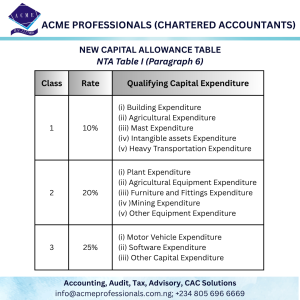
 𝗗𝗢𝗪𝗡𝗟𝗢𝗔𝗗 𝗡𝗘𝗪 𝗖𝗔𝗣𝗜𝗧𝗔𝗟 𝗔𝗟𝗟𝗢𝗪𝗔𝗡𝗖𝗘 𝗧𝗔𝗕𝗟𝗘, 𝗡𝗧𝗔 𝟮𝟬𝟮𝟱
The new Capital Allowance Table under the Nigeria Tax Act introduces a more structured classification of Qualifying Capital Expenditure in three (3) categories, with a single applicable rate assigned to each asset category.
This reform simplifies the computation of capital allowance by effectively adopting a straight-line approach based on defined asset useful lives. It removes the administrative burden and complexities associated with the erstwhile Initial Allowance and Annual Allowance regime under the repealed legislation.
What entities should do:
• Invest in assets that qualify for capital allowance to optimize tax efficiency
• Ensure accurate classification of assets in line with the prescribed categories
• Maintain a comprehensive and up-to-date fixed asset register
• Create and retain a dedicated asset file containing all relevant supporting documentation (e.g., invoices, title documents, contracts)
• Ensure proper recognition and disclosure of all qualifying assets in the financial statements
Failure to correctly classify assets or maintain adequate documentation may result in disallowances during tax audits, with potential financial and compliance implications.
#compliance #businessowner
𝙸 𝚊𝚖 𝚂𝚘𝚕𝚊 𝚃𝚊𝚒𝚠𝚘, 𝚈𝚘𝚞𝚛 𝚃𝚛𝚞𝚜𝚝𝚎𝚍 𝙵𝚒𝚗𝚊𝚗𝚌𝚒𝚊𝚕 𝙲𝚘𝚗𝚏𝚒𝚍𝚊𝚗𝚝!